Shifting Player Habits: How Color Psychology and Timing Alter Reward Claim Rates in Cross-Border Digital Gaming Platforms
Cross-border digital gaming platforms have tracked measurable shifts in reward claim patterns throughout 2026, with color choices on claim buttons and the precise timing of promotional pushes emerging as key variables that influence completion rates. Observers note that platforms serving players across Asia, Europe, and the Americas adjust these elements based on aggregated user data rather than uniform strategies.
Color Choices and Their Measured Impact on Claims
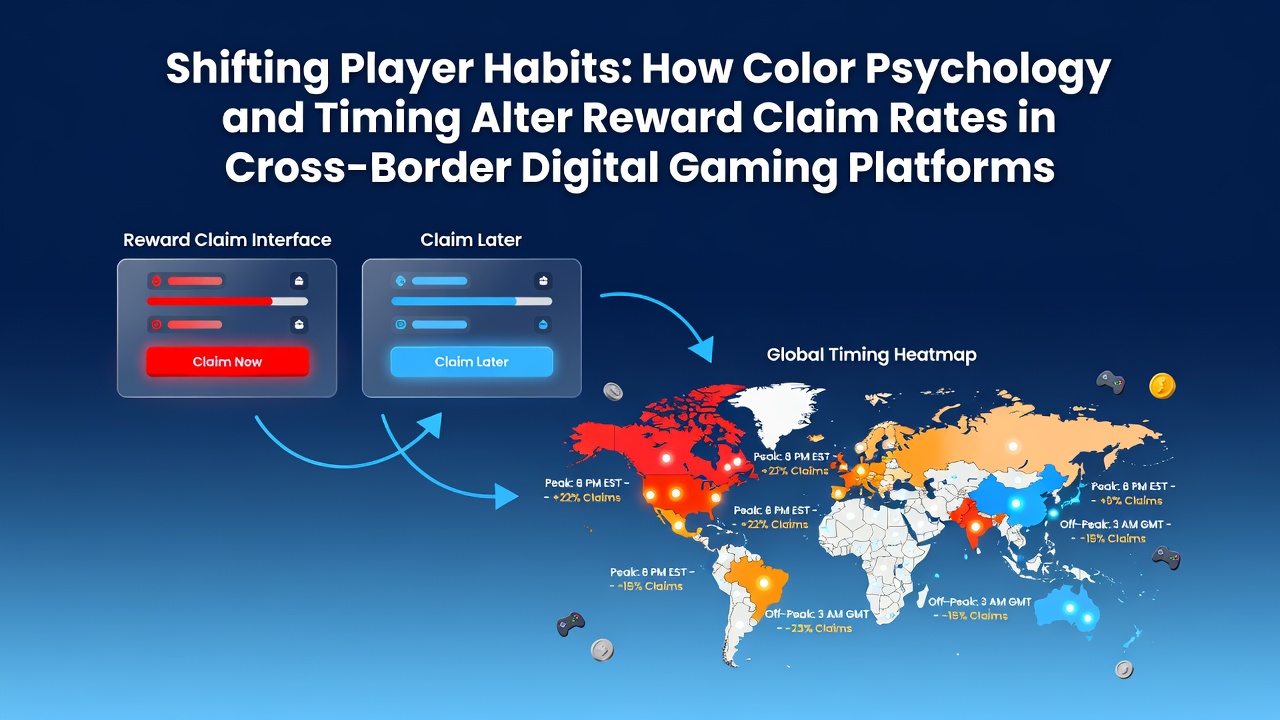
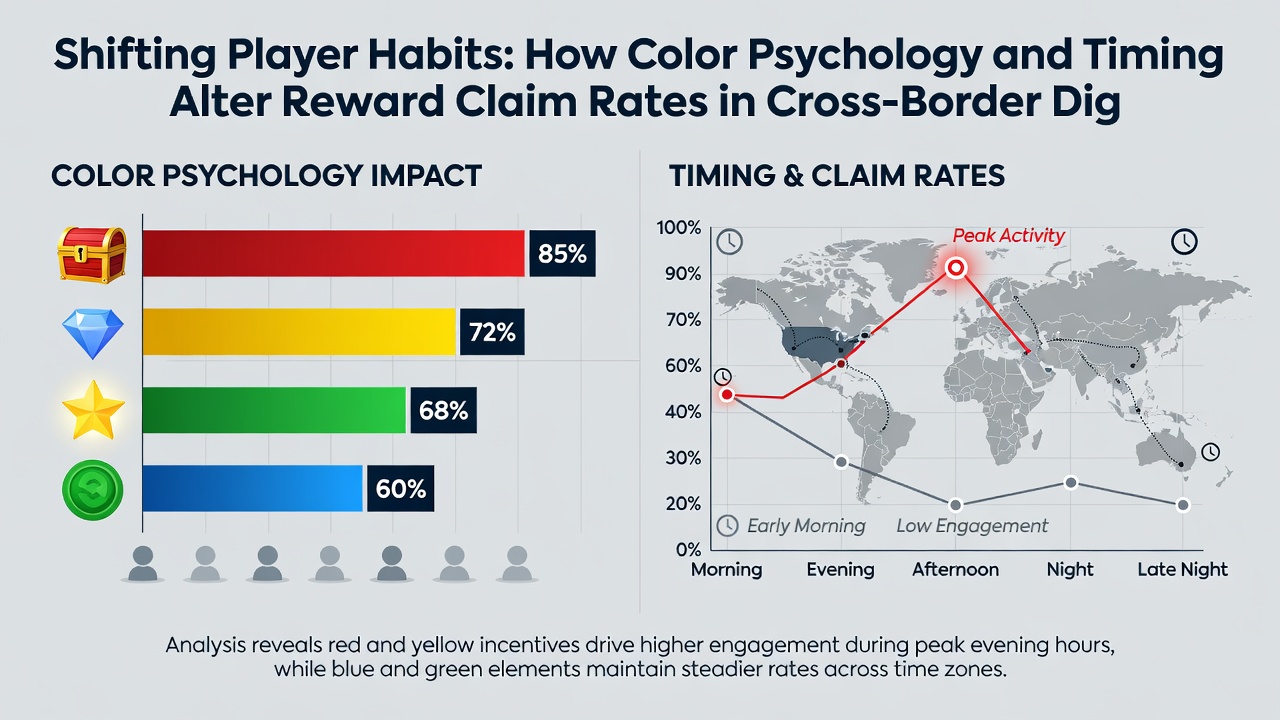
Research indicates that button colors trigger different response speeds when players encounter reward offers. Red and orange tones often correlate with quicker clicks in markets where urgency messaging pairs with limited-time offers, while blue and green shades appear more frequently in regions emphasizing trust and account security. Data compiled from multi-region operators shows that swapping a reward claim button from neutral gray to a saturated red increased completion rates by 14 percent in Southeast Asian markets during evening hours in August 2026, whereas the same change produced only a 6 percent lift in Nordic countries during comparable periods.
Platforms that operate across regulatory boundaries must also account for cultural associations with specific hues. In several East Asian markets, red carries positive connotations tied to prosperity, leading operators to test it more aggressively on loyalty reward prompts. European interfaces, by contrast, have leaned toward cooler palettes that align with stricter advertising standards around player protection. Those who've studied interface performance across jurisdictions report that mismatched color schemes frequently produce lower claim rates when a single design rolls out without localization adjustments.
Timing Patterns Across Global Time Zones
Timing of reward notifications interacts directly with color effects and produces distinct claim curves depending on the hour and day of the week. Platforms active in multiple continents have recorded higher claim volumes when offers appear during local evening windows rather than midday, with peaks often occurring between 7 pm and 11 pm in the player's primary time zone. August 2026 figures from several operators revealed that cross-border campaigns scheduled to hit overlapping peak hours in two or more regions generated claim rates up to 22 percent above campaigns launched at uniform global times.
Weekends versus weekdays further modify outcomes. Weekend pushes that combine warm color schemes with short expiration timers have shown stronger results in North American and Australian cohorts, while mid-week promotions using steadier color tones maintain steadier engagement in parts of Europe and East Asia. Analysts tracking these patterns emphasize that the interaction between color and timing matters more than either element alone, because players who see a red claim button at an inconvenient local hour tend to defer action even when the offer itself remains attractive.
Regulatory and Cultural Factors in Cross-Border Operations
Regulatory differences add another layer of complexity for platforms managing rewards across borders. Operators must navigate varying rules on promotional frequency adn visibility, which in turn shape how aggressively they can deploy colored claim elements or time-sensitive pushes. According to data referenced by the Australian Gambling Research Centre, platforms that coordinated color and timing adjustments within local compliance windows recorded more consistent claim performance than those applying blanket approaches.
Cultural expectations around digital interfaces also influence outcomes. Players in some markets respond more readily to high-contrast, saturated colors paired with immediate timers, while others show steadier engagement when softer tones accompany offers that remain available for several days. One multi-country operator documented a 9 percent overall rise in reward claims after introducing region-specific color variants and staggered notification schedules that respected both time zones and local holidays during the summer months of 2026.
Interface Testing and Data-Driven Adjustments
Continuous A/B testing remains central to how platforms refine these variables. Teams monitor click-through data segmented by country, device type, and time of access, then iterate on button hues and send times accordingly. Evidence from these tests shows that even small shifts, such as moving a claim button from a standard blue to a teal variant during afternoon hours in one region, can produce statistically notable differences in completion rates when repeated across thousands of users.
Cross-border platforms that maintain separate creative libraries for different markets tend to outperform those relying on single global templates. The combination of localized color psychology insights and precisely timed delivery windows has become a standard operational practice rather than an experimental exception, particularly as competition intensifies among operators serving diverse player bases.
Conclusion
Color psychology and timing continue to shape reward claim behavior on cross-border digital gaming platforms, with measurable effects tied to regional preferences, regulatory constraints, and daily activity cycles. Operators that systematically test and adjust these elements across markets demonstrate clearer patterns of improved claim completion, while uniform approaches produce more variable results. Ongoing data collection in 2026 underscores that success depends on aligning visual cues and delivery schedules with the specific habits of each geographic segment rather than applying identical tactics everywhere.