
Resorts World Casino Navigates Ongoing Dispute With Gaming Commission Over Racing Support Obligations
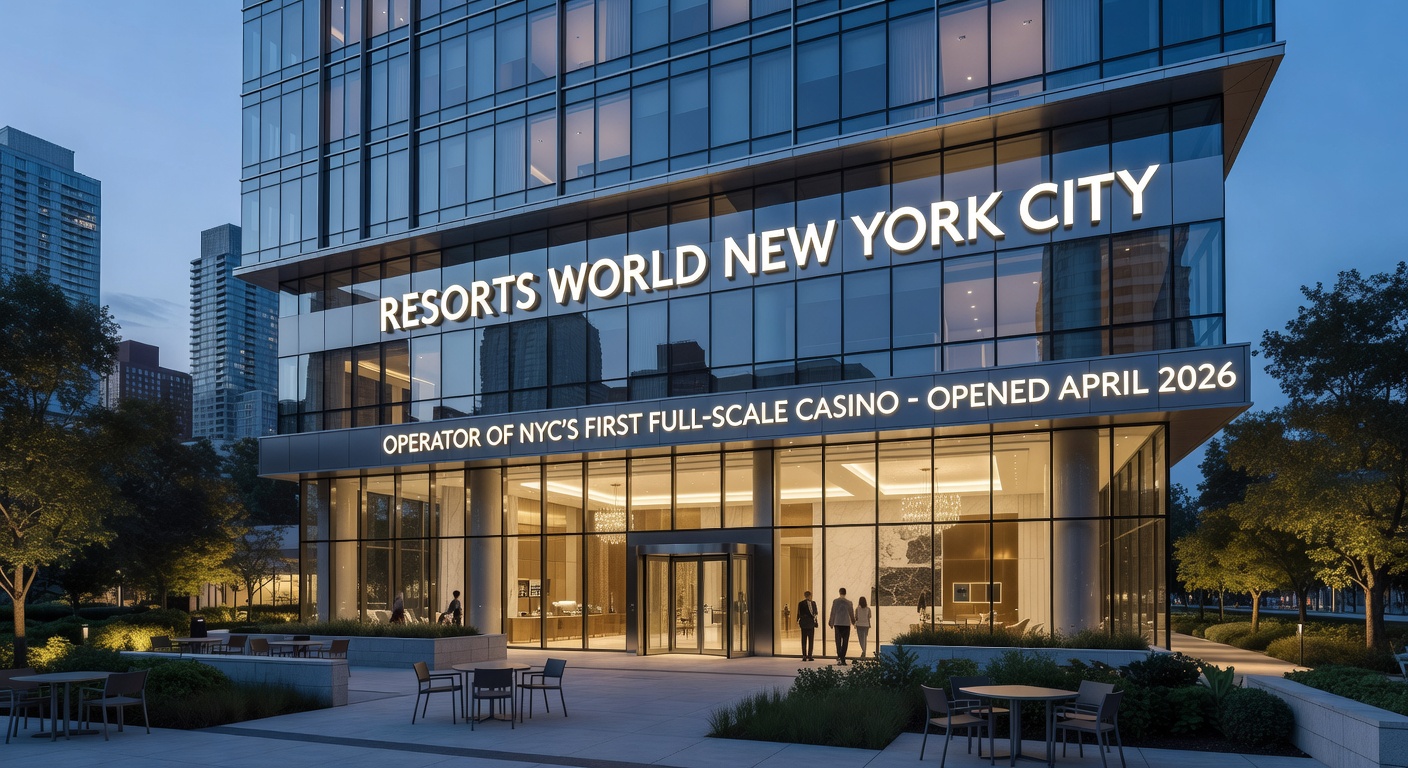
Resorts World, which began operations at New York City’s first full-scale casino in April 2026 at the Aqueduct Racetrack site in Queens, finds itself in a disagreement with the New York State Gaming Commission regarding annual racing support payments to the state’s horseracing industry, and those payments carry projections of at least $150 million each year while potentially exceeding $500 million across four years. The company maintains that its 56 percent tax rate bid already incorporates these obligations, whereas the commission holds that separate payments remain necessary, and this tension has prompted Resorts World to advance legislative proposals aimed at drawing the funds directly from the commercial gaming revenue fund.
Background on the Casino’s Launch and Tax Framework
The facility opened its doors amid broader expansion of commercial casinos across the state, and operators secured their license through a competitive bidding process that established a 56 percent tax rate on gaming revenue, yet the precise allocation of those funds continues to generate discussion between the company and regulators. According to information available on the Commercial Casinos webpage maintained by state authorities, tax rates and fund allocations follow established statutory guidelines that distinguish between direct gaming taxes and additional support requirements for related industries such as horseracing.
Observers note that the Aqueduct location carries historical ties to racing activities, which adds another layer to the current disagreement, and the payments in question represent an effort to sustain the state’s horseracing sector through contributions from new casino revenues. The dispute surfaced in reporting from early June 2026, when details emerged about Resorts World’s position that its bid already accounted for the racing support component within the overall tax structure.
Core Arguments From Both Sides
Resorts World contends that the 56 percent tax rate encompasses all required contributions, including those designated for racing support, and company representatives have stated that requiring additional separate payments would alter the financial terms under which the bid was submitted and approved. The New York State Gaming Commission, however, interprets the tax rate as applying to general gaming revenue while treating racing support payments as an independent obligation that must be fulfilled outside that rate, and this difference in interpretation forms the central point of contention.
Data from state projections indicate the annual figure starts at a minimum of $150 million and could accumulate beyond $500 million over a four-year period, and these amounts reflect calculations tied to casino revenue streams at the Queens location. Because the casino opened only two months prior to the emergence of public details about the disagreement, both parties continue to negotiate the mechanics of compliance while operations proceed under existing regulatory oversight.
Legislative Proposal Introduced by Resorts World
In response to the impasse, Resorts World has put forward legislation that would authorize the racing support payments to be drawn directly from the commercial gaming revenue fund rather than requiring separate remittances from the operator, and this approach seeks to align the payments with the existing tax framework without increasing the company’s overall financial burden beyond the bid terms. Proponents of the measure argue that such a mechanism would streamline fund allocation and reduce administrative complexity, while the commission has yet to indicate formal acceptance or rejection of the proposal as of the June 2026 reports.
Those familiar with similar arrangements in other jurisdictions point out that fund consolidation often appears in regulatory structures, and the proposed legislation mirrors patterns seen where gaming revenue supports multiple designated purposes through a single collection point. The bill remains under consideration, and its progress will determine whether the payments shift to the commercial gaming revenue fund or continue under the commission’s current interpretation.
Potential Impacts on Operations and State Revenue
Should the commission’s position prevail without legislative change, Resorts World would face additional annual outflows that the company believes fall outside its original bid calculations, and this scenario could influence future investment decisions or revenue distribution at the Queens facility. Conversely, passage of the proposed legislation would integrate the racing support amounts into the existing fund structure, thereby preserving the 56 percent tax rate as the primary contribution mechanism.
State revenue forecasts already incorporate the projected $150 million minimum annual payments regardless of the resolution method, and the four-year total exceeding $500 million underscores the scale of resources involved for the horseracing industry. Because the casino represents the first full-scale operation in New York City, the outcome of this disagreement carries implications for how subsequent casino developments structure their own tax and support obligations.
Current Status and Next Steps
As of June 2026, the disagreement persists without a final administrative or legislative resolution, and both Resorts World and the Gaming Commission continue to operate under their respective interpretations while monitoring developments in the state legislature. The company’s legislative proposal provides one pathway toward clarification, yet commission officials have signaled that any changes would require explicit statutory authorization.
Further discussions between the parties are anticipated in the coming months, and stakeholders in the horseracing sector remain attentive to how the funding mechanism ultimately takes shape. The situation illustrates the complexities that arise when new gaming facilities intersect with established industry support requirements, and the resolution will set precedents for similar arrangements elsewhere in the state.
Conclusion
The dispute between Resorts World and the New York State Gaming Commission centers on whether racing support payments form part of the 56 percent tax rate or constitute separate obligations, with annual amounts projected at no less than $150 million and totals surpassing $500 million over four years. The company’s legislative proposal to route payments through the commercial gaming revenue fund offers a potential resolution path, and developments through the remainder of 2026 will clarify the final structure of these contributions. State records and regulatory filings continue to track the matter as operations at the Aqueduct site proceed.