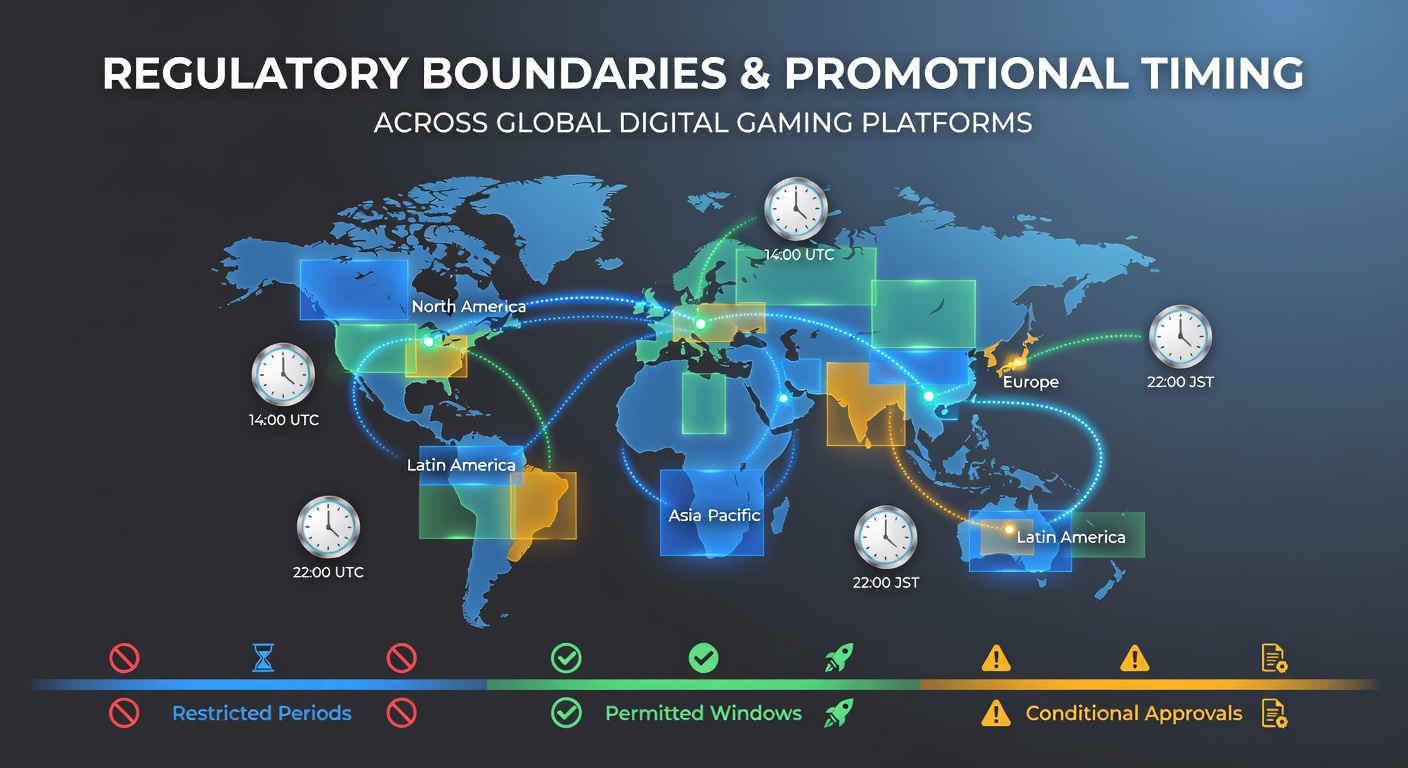
Regulatory Boundaries and Their Influence on Promotional Timing Across Global Digital Gaming Platforms
Digital gaming operators navigate a patchwork of rules that dictate exactly when promotional offers can appear, how long they run, and which audiences receive them first. These boundaries emerge from licensing conditions, advertising standards, and consumer protection statutes that vary sharply by region yet intersect on international platforms.European Frameworks Shape Seasonal Windows
Operators serving multiple European markets coordinate launch schedules around directives that limit promotional bursts during certain periods, and data from the European Commission shows member states enforce staggered rollout requirements tied to responsible gambling reporting cycles. Platforms often schedule major deposit match campaigns to align with quarterly compliance filings, which means timing shifts by weeks depending on whether a jurisdiction requires pre-approval or post-campaign audits.
Observers note that cross-border platforms maintain separate promotional calendars for each licensed entity, allowing them to activate offers in one country while holding back in another until local reporting deadlines pass. This approach avoids simultaneous exposure that could trigger additional scrutiny under varying national interpretations of the same EU-wide consumer protection guidelines.
North American State and Provincial Controls
In teh United States and Canada, individual state and provincial regulators set their own promotional calendars that operators must follow when targeting residents. The Alcohol and Gaming Commission of Ontario publishes clear windows during which certain bonus structures can be advertised, and operators adjust their global platform logic to suppress or reveal offers based on detected user location. Similar patterns appear in New Jersey and Pennsylvania, where gaming control boards require advance notice before promotional periods begin, forcing platforms to build automated timing gates into their systems.
Platforms that operate across multiple North American jurisdictions therefore maintain dynamic rule engines that reference real-time regulatory calendars rather than static marketing plans. Those who studied these systems report that the complexity increases when operators must also account for tribal gaming compacts that impose additional timing restrictions not present in commercial licenses.
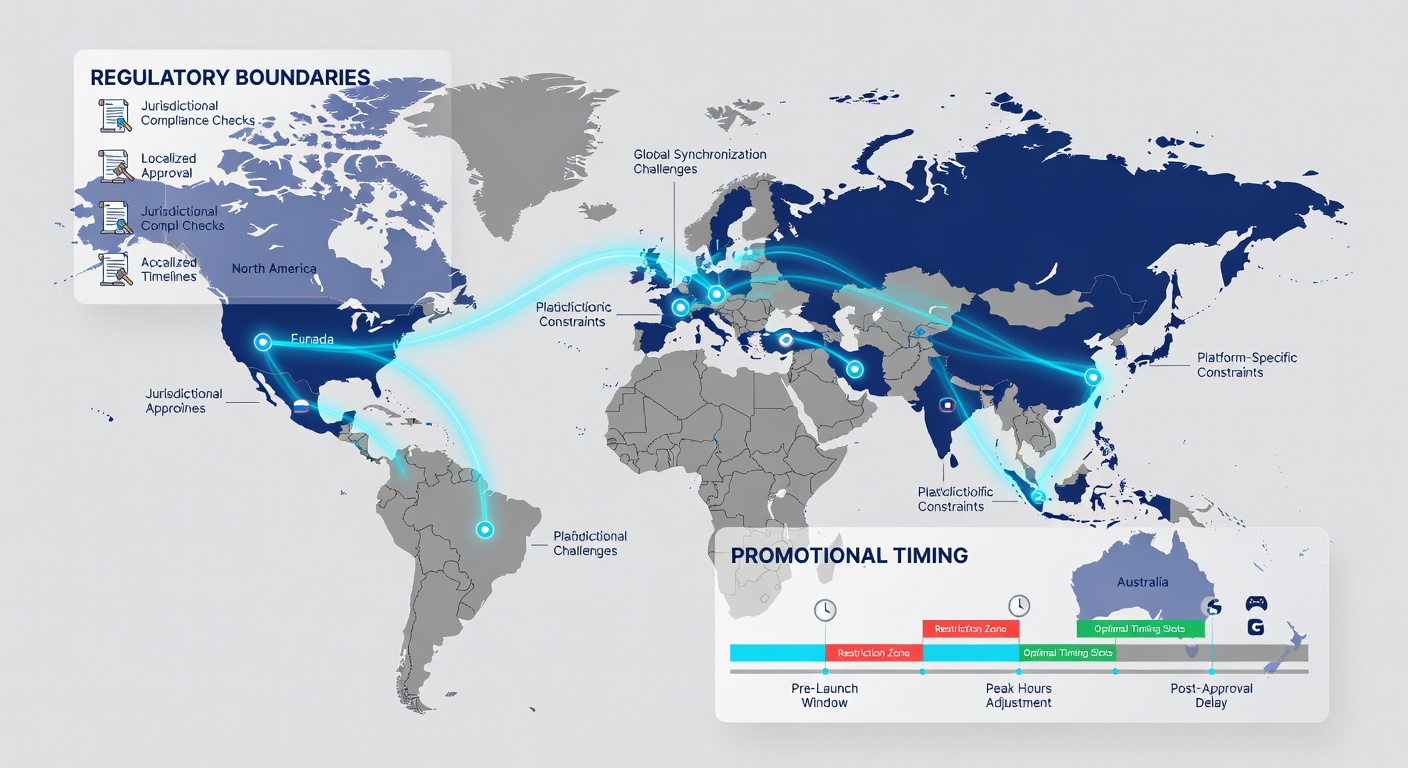
Asia-Pacific Timing Restrictions and Reporting Cycles
Australian operators face advertising blackout periods around major sporting events unless they meet specific pre-approval conditions set by state regulators, and the Australian Communications and Media Authority maintains public schedules that detail when promotional content may appear on digital channels. Platforms serving Australian users often delay free spin campaigns until after these windows open, which creates predictable quarterly patterns visible in industry traffic data.
Further north, regulators in several Asian markets impose seasonal restrictions tied to national holidays or fiscal reporting periods, requiring operators to pause certain promotions during designated months. Platforms respond by shifting focus to regions where restrictions are lighter during those same intervals, effectively redistributing promotional resources along regulatory timelines rather than purely commercial ones.
Platform Architecture Adapts to Regulatory Clocks
Global operators embed regulatory timing logic directly into their content management systems so that promotional assets activate only when all applicable rules permit. This technical layer pulls data from multiple government sources and updates automatically when a regulator revises its calendar, as occurred with several updates published in early June 2026. The result is that users in different locations encounter the same platform yet receive promotional offers on entirely different schedules.
Research from industry groups tracking these systems indicates that platforms with robust geo-specific timing controls experience fewer compliance interventions than those relying on manual oversight. Operators therefore invest in maintaining accurate mappings of each jurisdiction's promotional windows, which change at different frequencies depending on legislative activity and enforcement priorities.
Conclusion
Regulatory boundaries continue to define promotional timing across digital gaming platforms by establishing fixed calendars, pre-approval requirements, and blackout periods that operators must respect. Platforms respond through automated systems that reference multiple regulatory sources simultaneously, creating location-specific experiences within a single global service. As new rules emerge and existing ones receive updates, the architecture supporting these timing controls grows more intricate while remaining essential for sustained operation across jurisdictions.