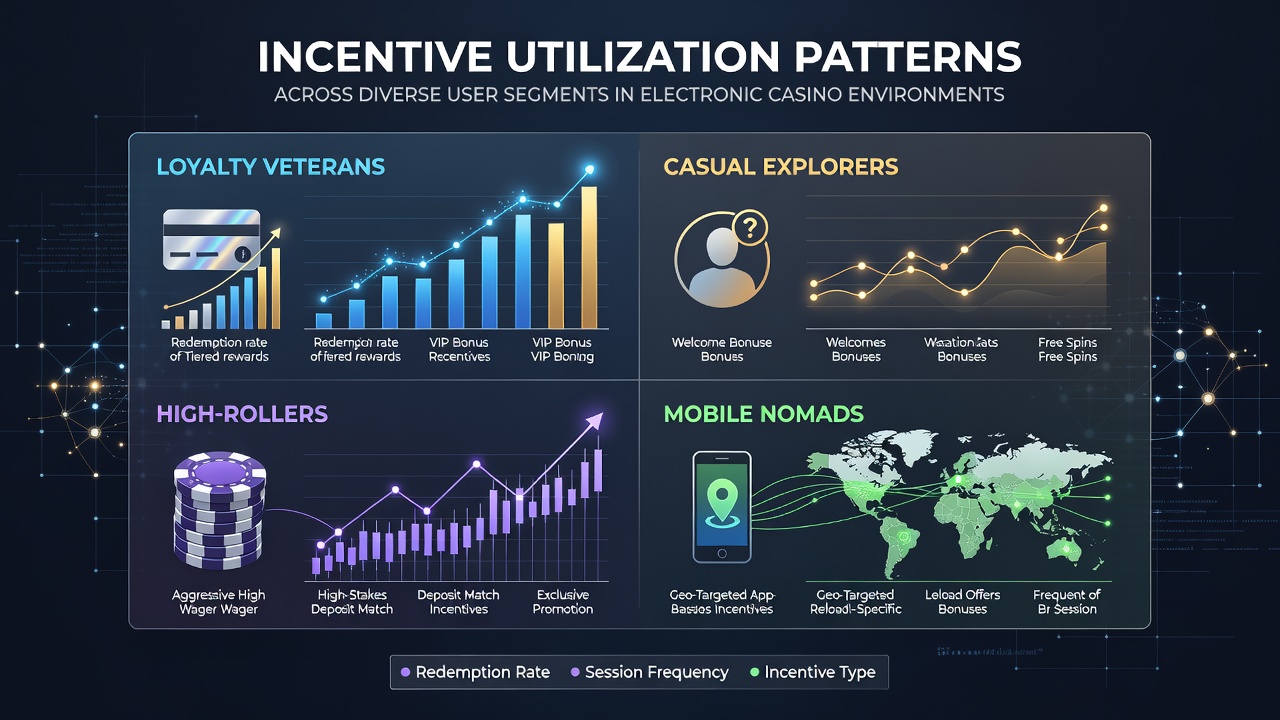
Patterns of incentive utilization across diverse user segments in electronic casino environments
Electronic casino platforms track incentive utilization through detailed segmentation models that separate users by age, geographic region, deposit frequency, and engagement duration. Data from major operators shows younger cohorts between 21 and 35 consistently activate free spin offers at higher rates than older groups, while users aged 45 and above demonstrate stronger preference for deposit match structures that extend playtime across multiple sessions.
Regional variations appear clearly in transaction logs from North American and European networks. Canadian players registered with provincial operators display elevated redemption of loyalty-based reload bonuses during summer months, whereas Australian users favor no-deposit incentives tied to specific game categories according to reports issued by the Australian Communications and Media Authority. These patterns hold steady across browser and mobile interfaces despite differences in regulatory frameworks.
Age-based utilization trends
Analytics platforms segment player bases into distinct brackets and record activation sequences that reveal consistent behaviors. The 18-30 group initiates bonus codes within the first 48 hours of account creation more frequently than any other cohort, often chaining multiple entry-level promotions before completing initial deposits. In contrast, participants over 50 maintain lower overall activation numbers yet achieve higher completion rates once they begin wagering requirements attached to matched funds.
Platform logs collected through June 2026 indicate these age-related differences persist across both established and emerging markets. Mid-tier users between 31 and 44 exhibit hybrid patterns that combine quick redemption of free spins with selective engagement in cashback programs during periods of higher activity.
Regional and behavioral segmentation
Operators divide markets by regulatory environment and cultural preferences when evaluating incentive performance. European segments regulated under frameworks from the Malta Gaming Authority show elevated uptake of time-limited deposit bonuses compared with North American users who respond more strongly to free-to-play entry mechanics. Behavioral clusters further refine these observations by grouping users according to session length and average stake size rather than location alone.
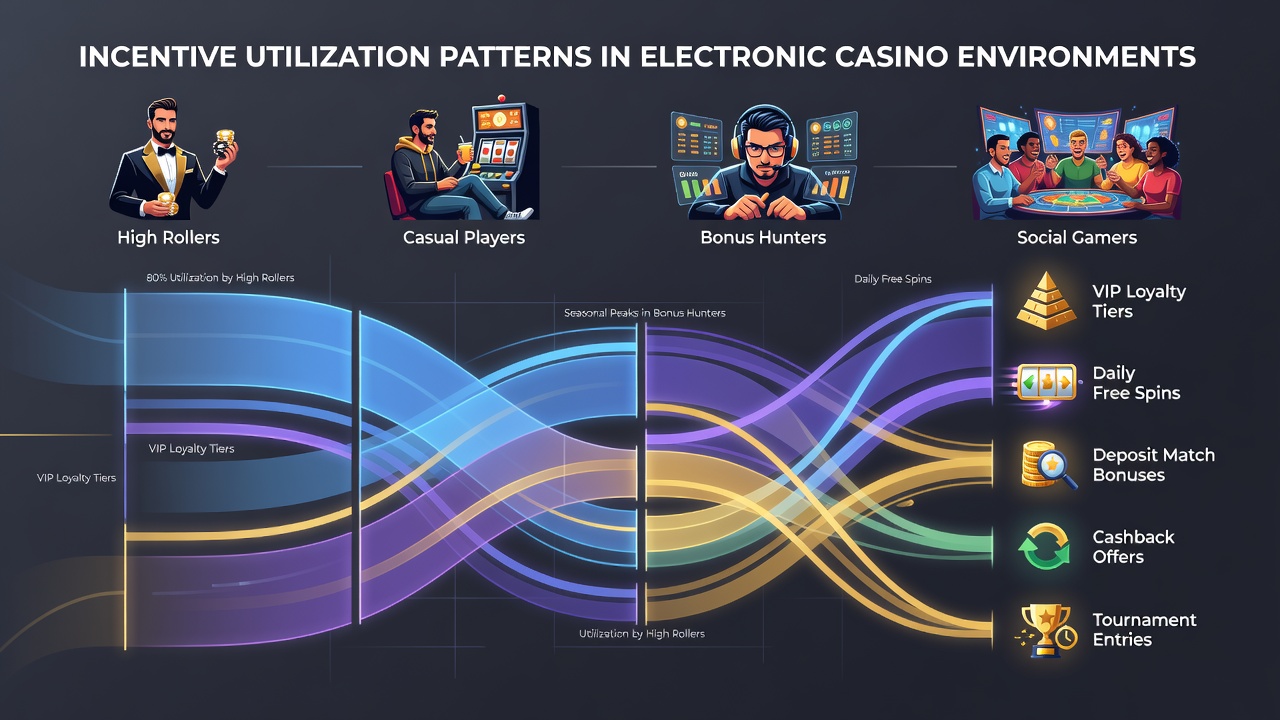
High-volume players maintain steady utilization of VIP-tier reload offers that scale with prior activity levels, while casual participants respond primarily to one-time welcome structures. Payment method preferences correlate with these segments as well, with e-wallet users demonstrating faster code redemption cycles than those relying on bank transfers or card deposits.
Device and interface influences
Cross-device tracking reveals that mobile users activate short-duration incentives such as daily free spins at greater volume than desktop counterparts. Tablet sessions, though fewer in total count, produce longer average engagement periods once an incentive is claimed. These device-specific patterns remain stable across multiple operator datasets examined in 2026.
Interface design elements including button placement and notification timing further shape redemption sequences within each segment. Simpler navigation flows correlate with higher completion percentages among first-time users regardless of age bracket.
Retention outcomes across segments
Longitudinal records demonstrate that users who combine multiple incentive types within a single month exhibit extended account lifespans compared with single-incentive participants. Deposit match structures drive repeat activity most effectively among mid-frequency players, while free spin offers serve as entry points that convert at varying rates depending on initial game selection.
Operators adjust allocation strategies based on these observed retention differentials. Segments showing rapid post-incentive drop-off receive targeted follow-up offers calibrated to their prior interaction history rather than generic promotions.
Conclusion
Comprehensive tracking across electronic casino environments continues to highlight stable differences in how distinct user groups engage with available incentives. Age, region, device preference, and behavioral frequency each contribute measurable variables that operators monitor to refine distribution methods. Ongoing data collection through mid-2026 supports these segmentation frameworks while revealing incremental shifts tied to new platform features and regulatory updates in select jurisdictions.