
How Bonus Codes Reshape Player Retention Strategies Across Mobile Casino Platforms
Bonus codes have become central tools that operators deploy to maintain engagement on mobile casino platforms, where competition for user attention remains intense and session lengths fluctuate with device usage patterns. Data from industry tracking services indicates that these codes, which unlock targeted rewards like free spins or deposit matches, integrate directly into retention algorithms that monitor login frequency and betting volume across apps and browsers. Research compiled by the University of Nevada Gaming Innovation Lab shows that platforms incorporating personalized bonus code sequences retain active users at rates 18 percent higher than those relying solely on generic welcome offers.
Mobile operators began shifting emphasis toward code-based incentives around 2023, when app store policies and payment processor rules tightened restrictions on broad advertising spend. Those who've examined retention datasets note that bonus codes allow for precise segmentation, letting platforms deliver time-limited offers based on individual play history rather than blanket promotions. This approach aligns with findings from a 2025 report by the Canadian Gaming Association, which documented how mobile-first casinos reduced churn by issuing codes that reset after specific inactivity thresholds, such as seven days without a deposit.
Mechanics Behind Code-Driven Retention Loops
Operators embed bonus codes into push notifications and in-app messages that trigger at moments when player activity dips, creating feedback loops that encourage repeated sessions. A code might unlock incremental free spins after a user completes a certain number of spins on a featured slot, with the reward scaling according to prior wager totals. Figures released by mobile analytics firms reveal that such layered incentives extend average session duration by 22 minutes compared to standard no-deposit structures, because the codes often carry expiration timers that prompt immediate returns to the platform.
Platform developers have refined backend systems to generate unique codes dynamically, pulling from real-time data on device type, geographic location, and game preferences. This technical layer means a player in one region might receive a code tied to progressive jackpot games while another sees offers for table game variants, all delivered through the same app framework. As of May 2026, several major operators have rolled out cross-device synchronization that carries unused code value from mobile sessions to desktop logins, reducing friction when users switch between screens.
Regional Variations in Code Implementation
European operators tend to pair bonus codes with responsible gaming tools, such as mandatory cool-down periods before code redemption, whereas North American platforms emphasize volume-based rewards that scale with total deposits over a calendar month. Australian regulatory updates effective in early 2026 require clear disclosure of code terms within the app interface itself, a measure that has prompted developers to streamline redemption flows and reduce abandoned offers. These differences illustrate how local rules shape the way codes function as retention mechanisms rather than purely marketing devices.
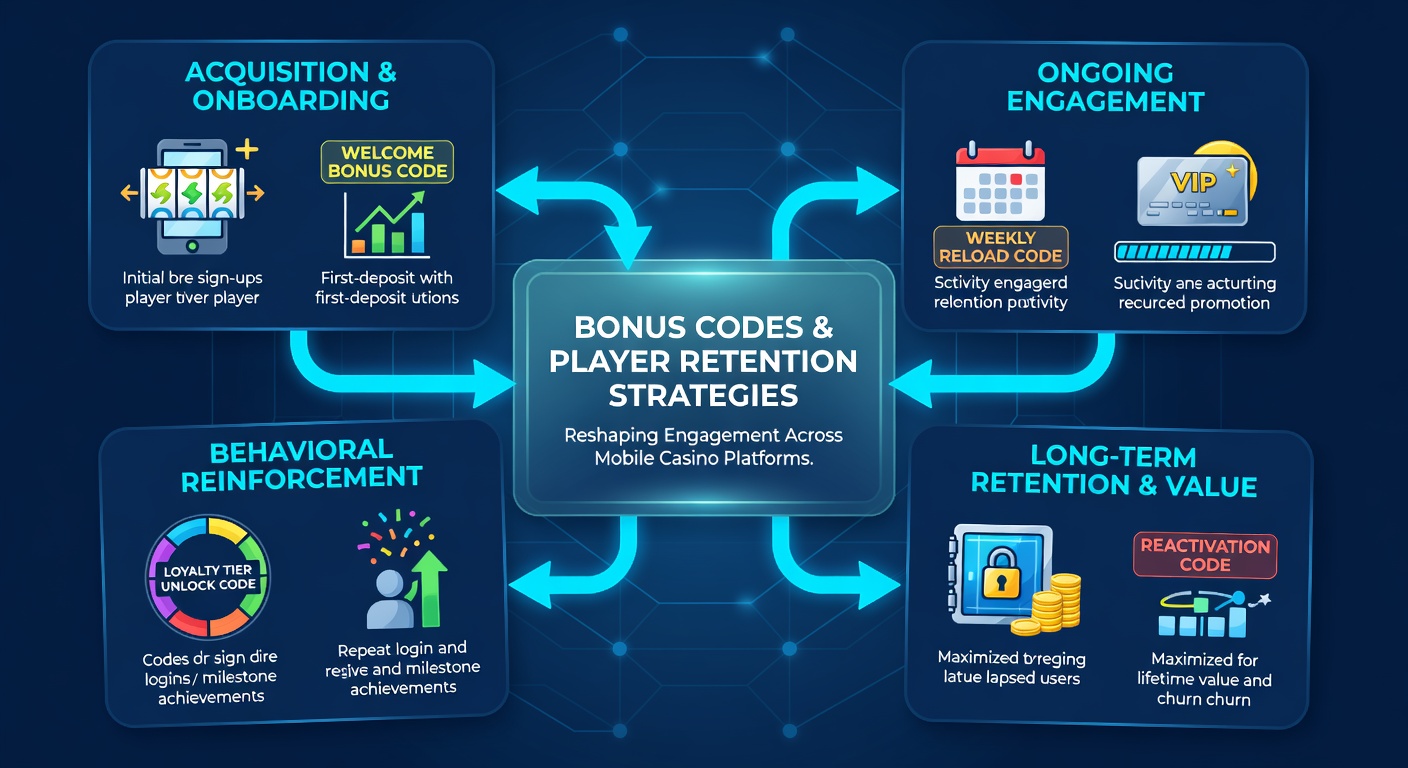
One study released by the International Gaming Institute tracked 12 mobile platforms across three continents and found that retention curves steepened most sharply in the first 14 days after code introduction, with sustained gains appearing when codes renewed automatically upon reaching loyalty milestones. Observers note that this pattern holds across both iOS and Android ecosystems, although Android users respond more readily to codes distributed via SMS because of higher notification open rates on that operating system.
Data Patterns and Measurement Approaches
Retention metrics now frequently incorporate code redemption rates alongside traditional measures like day-7 and day-30 return visits. When codes carry wagering requirements calibrated to player lifetime value, platforms record lower drop-off during the requirement fulfillment window. Reports from the Australian Institute of Gambling Research indicate that mobile casinos using tiered code systems experience a 31 percent lift in repeat deposits within the first quarter after implementation, provided the codes refresh based on activity rather than fixed calendars.
Operators also deploy A/B testing frameworks that compare code variants in real time, measuring how changes in reward size or eligibility criteria affect cohort retention. These tests run continuously, feeding results back into machine-learning models that predict which users are likely to lapse and which codes would most effectively re-engage them. The process creates a feedback cycle where retention strategy evolves weekly rather than quarterly.
Conclusion
Bonus codes have shifted from simple acquisition tools to core components of retention architecture on mobile casino platforms, supported by granular data collection and region-specific compliance frameworks. As platforms continue refining delivery timing and reward personalization through May 2026 and beyond, the codes serve as measurable levers that directly influence user return rates and lifetime engagement patterns. Continued monitoring by regulatory bodies and academic researchers will determine how these strategies adapt to emerging device capabilities and evolving player expectations.