
Economic Indicators and Their Timing Impact on Exclusive Incentive Rollouts in Virtual Entertainment Venues
Economic indicators such as GDP growth rates, unemployment figures, and consumer confidence indices shape the schedules that virtual entertainment venues follow when launching exclusive incentives like targeted deposit matches and limited-time free spin packages. Observers note that platforms monitor these metrics closely because shifts in broader financial conditions often coincide with adjustments in promotional calendars across browser-based and app-driven gaming environments.
Key Economic Metrics Driving Promotional Decisions
Monthly releases from government statistical agencies provide the raw data that analysts at virtual venues track to anticipate player spending patterns. The Bureau of Economic Analysis publishes quarterly GDP revisions that frequently signal whether household discretionary budgets are expanding or contracting, and operators respond by aligning incentive launches with those announcements. When preliminary GDP readings point to slowdowns, platforms tend to accelerate rollout of time-limited offers to maintain engagement levels during periods of reduced activity.
Unemployment data from the Bureau of Labor Statistics adds another layer of timing precision because rising jobless claims often correlate with changes in average session lengths and deposit frequencies. Virtual venues review these figures alongside retail sales reports to decide whether an exclusive bonus code campaign should begin immediately after a data release or wait for confirmation in subsequent months. Researchers have observed that the interval between indicator publication and incentive deployment can span anywhere from two to six weeks depending on the magnitude of the reported shift.
Timing Patterns Across Market Cycles
Virtual entertainment venues adjust exclusive incentive schedules in response to both expansionary and contractionary phases. During stretches when inflation readings moderate, operators have introduced staggered rollout sequences that begin with smaller loyalty rewards and scale up to larger deposit match structures once consumer spending data stabilizes. This approach allows platforms to test response rates before committing larger promotional budgets.
Conversely, when leading indicators such as the Conference Board's consumer confidence index decline sharply, many venues compress their launch windows so that new incentive codes reach active users within days of the data release rather than weeks. The compressed timing helps offset potential drops in average revenue per user by encouraging immediate participation. Data collected across multiple platforms shows that campaigns initiated within ten days of negative indicator releases achieve higher initial redemption rates than those delayed until the following quarter.
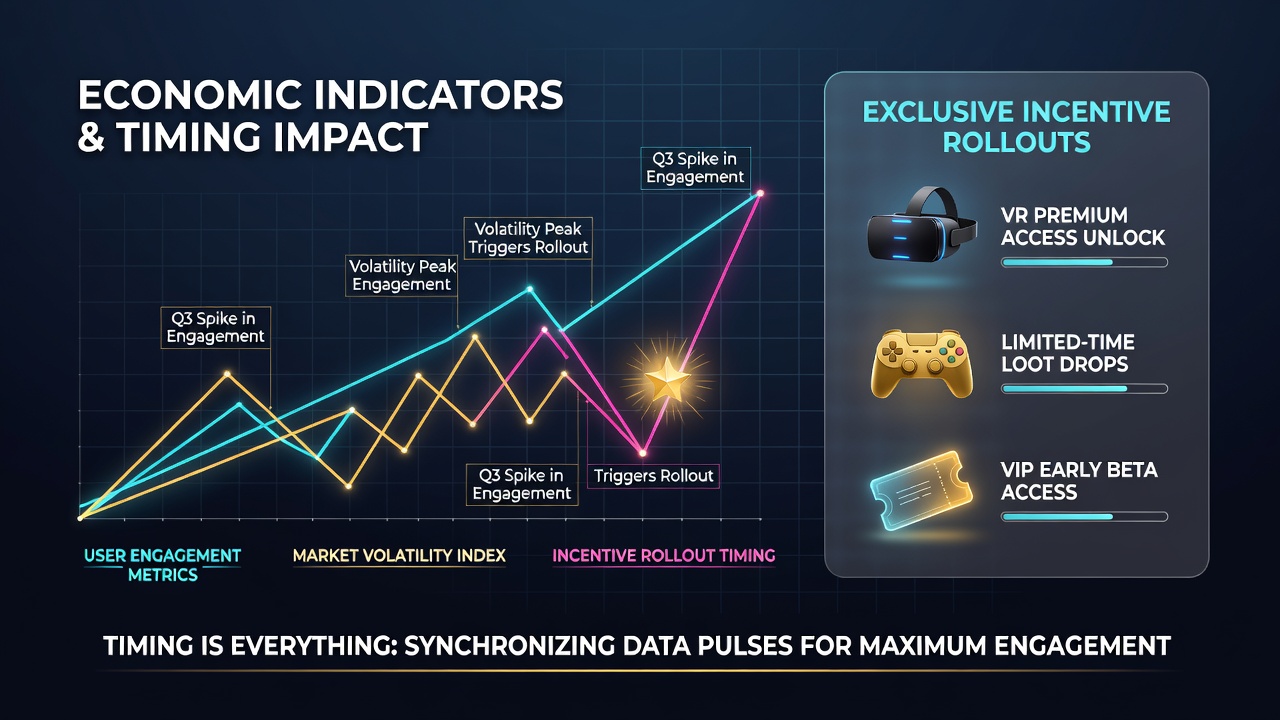
In July 2026, several major platforms synchronized limited-time promotions with the release of second-quarter employment statistics, releasing exclusive free spin packages the same week the figures appeared. This coordination reflected an established pattern where venues treat fresh labor market data as a trigger point for refreshing promotional inventories rather than waiting for broader quarterly earnings reports.
Regional Variations in Indicator Response
Platforms serving different geographic markets apply distinct timing rules based on the primary indicators that influence local player bases. Venues focused on European users often wait for Eurostat inflation updates before finalizing incentive structures, whereas North American operators prioritize Federal Reserve interest rate announcements because those decisions affect credit availability and disposable income expectations. Australian-facing sites have been documented responding more directly to monthly retail trade figures from the Australian Bureau of Statistics when planning their exclusive rollout calendars.
Cross-border operators maintain separate promotional teams that each track region-specific releases, resulting in staggered global incentive waves rather than simultaneous worldwide campaigns. This segmentation prevents any single economic report from dictating the entire promotional schedule and allows venues to maintain consistent engagement across time zones.
Integration With Platform Analytics
Virtual venues combine official economic releases with their internal telemetry to refine rollout timing further. When GDP or employment data diverges from internal forecasts, analysts recalibrate expected redemption curves and adjust the duration of exclusive offers accordingly. For instance, stronger-than-anticipated consumer spending numbers have prompted some platforms to extend incentive validity periods by an additional week to capture the projected uptick in activity.
Those who manage promotional calendars report that the lag between indicator publication and observable changes in user behavior typically ranges from 14 to 30 days, giving teams a predictable window in which to finalize creative assets and code distribution logistics. This predictability supports more accurate budgeting for marketing expenditures tied directly to economic cycles.
Conclusion
Economic indicators continue to serve as reliable reference points that virtual entertainment venues use when determining the precise timing of exclusive incentive rollouts. By aligning promotional schedules with GDP revisions, employment statistics, and consumer confidence measures, platforms maintain relevance amid shifting financial conditions while optimizing resource allocation. The practice of monitoring official releases and responding within defined windows has become standard operational procedure across the sector, ensuring that incentive availability matches observable changes in player spending capacity.